Industry Insights · 6 min read · Nov 11, 2026
Where Does Trust Come From When a Client Has Never Met You?
Building trust remotely starts before the first call. Learn 5 tangible ways to earn client confidence in the first 30 days of a virtual relationship.
By AI Travel Studio Team
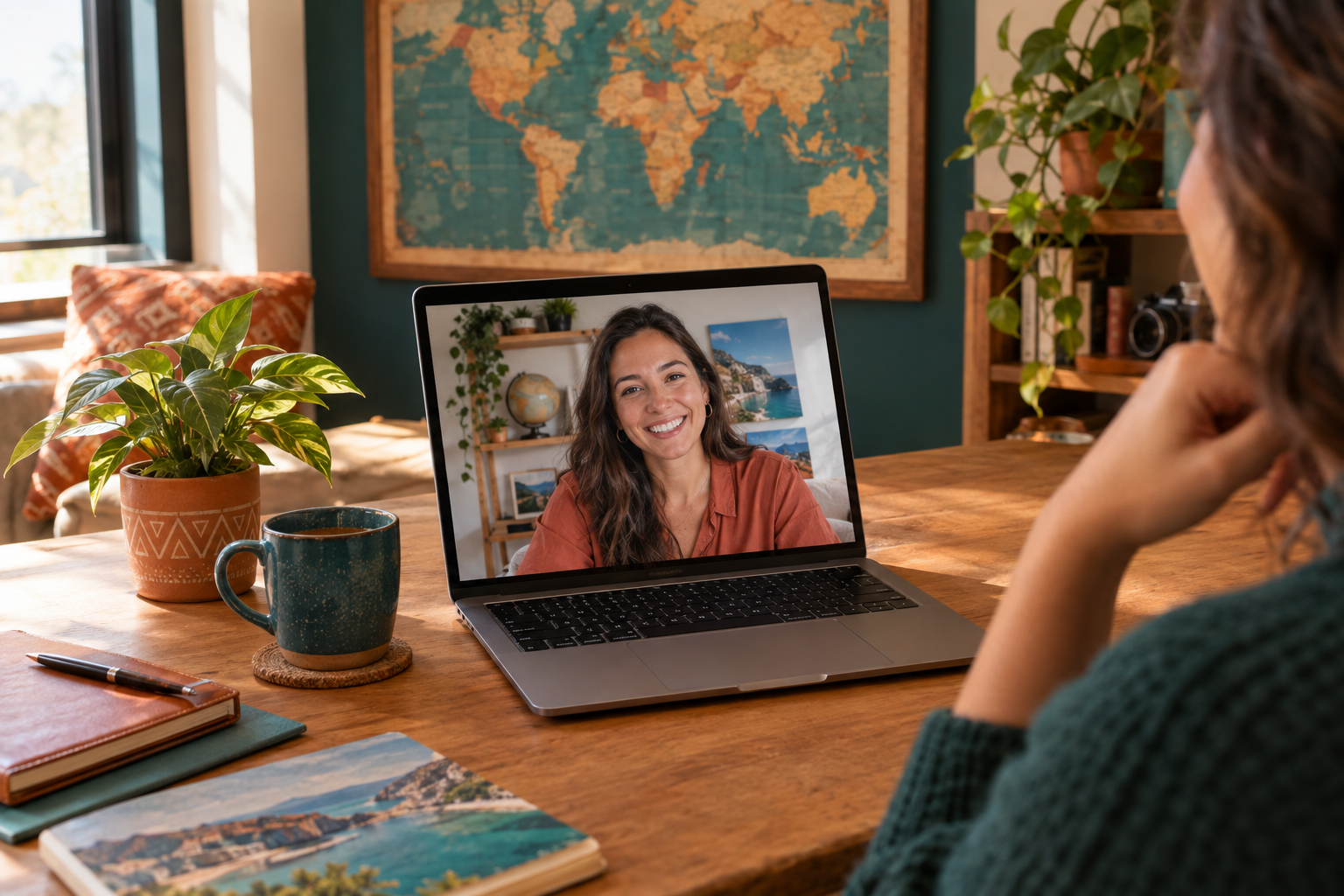
Trust in a virtual-first advisor relationship is built through consistent communication, transparent processes, visible credibility signals, and third-party validation—long before a client ever sees your face on a Zoom call.
More advisors today are onboarding clients entirely online. Maybe you're building a remote practice from scratch. Maybe a referral came in from three states away. Maybe your ideal client lives across the country and prefers to work digitally from the start. Whatever the path, the question is the same: how do you build trust when there's no face-to-face introduction, no handshake, no coffee meeting to break the ice?
The answer lies in the T of the HEART Framework: Trust. And trust, especially in a remote relationship, doesn't happen by accident. It's the result of intentional, repeated actions that signal competence, transparency, and reliability. Here are five tangible ways to build it in the first 30 days.
How do testimonials and client stories build trust before the first conversation?
Your prospective client is doing research before they ever reach out. They're Googling your name, scanning your website, and looking for proof that other travelers like them had a great experience with you.
This is where published client stories become one of your most powerful trust signals. A well-written story—featuring a real traveler's experience, photos from their trip, and specific details about how you solved a problem or exceeded expectations—does more than showcase your work. It shows that real people trust you, that you follow through, and that you care enough to celebrate your clients publicly.
Testimonials work the same way, but stories go deeper. They let a prospect see themselves in the narrative. They answer the unspoken question: Will this advisor understand what I want, and will they deliver?
If you don't yet have client stories live on your site, the first 30 days of a new relationship is also the perfect time to plant the seed. Let new clients know upfront that you love sharing the great trips you plan—with their permission, of course—and that you'll reach out after their journey to capture their experience. It signals confidence and sets an expectation of excellence.
What role does transparent communication play in earning remote trust?
In a remote relationship, silence is the enemy of trust. When a client can't walk into your office or run into you at an event, they need to feel your presence through communication.
Transparency starts with setting expectations early. In your first email or call, outline what the planning process looks like: how often you'll check in, what they can expect from you at each stage, and how they can reach you if something comes up. Then follow through on those promises, every time.
Consistent communication doesn't mean you need to be available 24/7. It means you respond within the timeframe you committed to. It means you proactively update clients when you're working on their itinerary, even if there's nothing urgent to report. A simple "I'm finalizing your Florence hotel options and will send you three recommendations by Thursday" reassures the client that you're on it.
Transparency also means being honest when you don't have an answer yet, or when something didn't go as planned. Clients trust advisors who communicate like real people, not perfection machines.
How do certifications and credentials signal trustworthiness online?
When a client lands on your website or LinkedIn profile, visible credentials act as shorthand for expertise. They answer a critical question in the client's mind: Does this person actually know what they're doing?
Certifications from recognized organizations—whether it's a Certified Travel Associate (CTA) designation, specialist certifications from tourism boards, or membership in professional groups like ASTA or Virtuoso—signal that you're committed to your craft and that a third party has vetted your knowledge.
Display these prominently. Not buried in an "About" page footer, but in your bio, your email signature, and your social profiles. If you're a destination specialist, make that clear. If you've completed advanced training on a cruise line or resort brand, let that be visible.
The same goes for your online presence. An active, professional LinkedIn profile, a Google Business listing with reviews, and a clean, updated website all contribute to the perception that you're established and credible. A prospect who finds you through a referral will still Google you—make sure what they find reinforces trust, not raises questions.
Why does community presence matter when building trust remotely?
Clients want to work with advisors who are connected, informed, and engaged in their industry. When a prospect sees that you're active in a professional travel community, contributing to discussions, sharing insights, or participating in industry events, it signals that you're not working in isolation—you're part of a larger ecosystem of expertise.
This is where your involvement in communities like AI Travel Studio, Travel Agency Tribes, or other advisor networks becomes a trust asset. You don't need to share every detail of your community participation publicly, but mentioning that you're part of a vetted professional group, or sharing a thoughtful industry insight on social media, reinforces that you're constantly learning and improving.
It also shows clients that you have support. Travel is complex. Things go wrong. When a client knows you're backed by a network of other professionals, it adds a layer of confidence that you'll be able to handle the unexpected.
What can you do in the first 30 days to lock in trust with a new remote client?
The first month of a client relationship sets the tone for everything that follows. Here's a simple checklist to build trust from day one:
- Send a welcome email or packet that outlines your process, introduces yourself personally, and sets clear expectations for communication.
- Schedule a kickoff call (even if it's brief) to put a face and voice to the name. Video builds connection faster than email alone.
- Follow up promptly after every touchpoint. If you say you'll send options by Friday, send them by Friday.
- Share a piece of social proof early—a recent client story, a glowing review, or a destination you just returned from and know inside out.
- Proactively communicate progress. Even a short "I'm working on this, and here's where we are" message reassures the client they made the right choice.
These actions may seem small, but they compound. By the end of 30 days, the client should feel like they know you, trust your process, and believe you'll deliver.
How does Trust in HEART connect to everything else?
Trust doesn't exist in isolation. It's the foundation that makes every other part of the HEART Framework possible. Without trust, a client won't share what they really want (Authenticity). They won't feel comfortable leaning on your expertise (Human-Centric). They won't stay in touch after the trip (Relationships). And they certainly won't refer you to their friends.
In a remote-first world, trust is harder to build and easier to lose. But when you approach it with intention—through visible credibility, transparent communication, published client stories, and consistent follow-through—you can create the same depth of relationship as an advisor who works face-to-face. Sometimes even stronger, because every interaction is deliberate.
If you're looking for a way to amplify trust signals at scale, publishing client stories is one of the highest-leverage moves you can make. Tools like Amplify help you turn every great trip into a polished, authentic story that works for you long after the client returns home. Learn more at https://amplify.aitravelstudio.com.
Frequently Asked Questions
How do testimonials and client stories build trust before the first conversation?
Your prospective client is doing research before they ever reach out. They're Googling your name, scanning your website, and looking for proof that other travelers like them had a great experience with you.
This is where published client stories become one of your most powerful trust signals. A well-written story—featuring a real traveler's experience, photos from their trip, and specific details about how you solved a problem or exceeded expectations—does more than showcase your work. It shows that real people trust you, that you follow through, and that you care enough to celebrate your clients publicly.
Testimonials work the same way, but stories go deeper. They let a prospect see themselves in the narrative. They answer the unspoken question: Will this advisor understand what I want, and will they deliver?
If you don't yet have client stories live on your site, the first 30 days of a new relationship is also the perfect time to plant the seed. Let new clients know upfront that you love sharing the great trips you plan—with their permission, of course—and that you'll reach out after their journey to capture their experience. It signals confidence and sets an expectation of excellence.
What role does transparent communication play in earning remote trust?
In a remote relationship, silence is the enemy of trust. When a client can't walk into your office or run into you at an event, they need to feel your presence through communication.
Transparency starts with setting expectations early. In your first email or call, outline what the planning process looks like: how often you'll check in, what they can expect from you at each stage, and how they can reach you if something comes up. Then follow through on those promises, every time.
Consistent communication doesn't mean you need to be available 24/7. It means you respond within the timeframe you committed to. It means you proactively update clients when you're working on their itinerary, even if there's nothing urgent to report. A simple "I'm finalizing your Florence hotel options and will send you three recommendations by Thursday" reassures the client that you're on it.
Transparency also means being honest when you don't have an answer yet, or when something didn't go as planned. Clients trust advisors who communicate like real people, not perfection machines.
How do certifications and credentials signal trustworthiness online?
When a client lands on your website or LinkedIn profile, visible credentials act as shorthand for expertise. They answer a critical question in the client's mind: Does this person actually know what they're doing?
Certifications from recognized organizations—whether it's a Certified Travel Associate (CTA) designation, specialist certifications from tourism boards, or membership in professional groups like ASTA or Virtuoso—signal that you're committed to your craft and that a third party has vetted your knowledge.
Display these prominently. Not buried in an "About" page footer, but in your bio, your email signature, and your social profiles. If you're a destination specialist, make that clear. If you've completed advanced training on a cruise line or resort brand, let that be visible.
The same goes for your online presence. An active, professional LinkedIn profile, a Google Business listing with reviews, and a clean, updated website all contribute to the perception that you're established and credible. A prospect who finds you through a referral will still Google you—make sure what they find reinforces trust, not raises questions.
Why does community presence matter when building trust remotely?
Clients want to work with advisors who are connected, informed, and engaged in their industry. When a prospect sees that you're active in a professional travel community, contributing to discussions, sharing insights, or participating in industry events, it signals that you're not working in isolation—you're part of a larger ecosystem of expertise.
This is where your involvement in communities like AI Travel Studio, Travel Agency Tribes, or other advisor networks becomes a trust asset. You don't need to share every detail of your community participation publicly, but mentioning that you're part of a vetted professional group, or sharing a thoughtful industry insight on social media, reinforces that you're constantly learning and improving.
It also shows clients that you have support. Travel is complex. Things go wrong. When a client knows you're backed by a network of other professionals, it adds a layer of confidence that you'll be able to handle the unexpected.
What can you do in the first 30 days to lock in trust with a new remote client?
The first month of a client relationship sets the tone for everything that follows. Here's a simple checklist to build trust from day one:
- Send a welcome email or packet that outlines your process, introduces yourself personally, and sets clear expectations for communication.
- Schedule a kickoff call (even if it's brief) to put a face and voice to the name. Video builds connection faster than email alone.
- Follow up promptly after every touchpoint. If you say you'll send options by Friday, send them by Friday.
- Share a piece of social proof early—a recent client story, a glowing review, or a destination you just returned from and know inside out.
- Proactively communicate progress. Even a short "I'm working on this, and here's where we are" message reassures the client they made the right choice.
These actions may seem small, but they compound. By the end of 30 days, the client should feel like they know you, trust your process, and believe you'll deliver.
How does Trust in HEART connect to everything else?
Trust doesn't exist in isolation. It's the foundation that makes every other part of the HEART Framework possible. Without trust, a client won't share what they really want (Authenticity). They won't feel comfortable leaning on your expertise (Human-Centric). They won't stay in touch after the trip (Relationships). And they certainly won't refer you to their friends.
In a remote-first world, trust is harder to build and easier to lose. But when you approach it with intention—through visible credibility, transparent communication, published client stories, and consistent follow-through—you can create the same depth of relationship as an advisor who works face-to-face. Sometimes even stronger, because every interaction is deliberate.
If you're looking for a way to amplify trust signals at scale, publishing client stories is one of the highest-leverage moves you can make. Tools like Amplify help you turn every great trip into a polished, authentic story that works for you long after the client returns home. Learn more at https://amplify.aitravelstudio.com.